Words first
The offer, service area, proof, and next step need to be understandable before visual polish can help.
Web design for small businesses
If you are starting without a site, we begin with your offer, your customers, and the questions people ask before they call. Design gives those answers a shape that feels like your business.
From the first page
I plan the pages before styling them. A service business may need a focused homepage, clear service pages, an about page, work or examples, and direct contact details. The exact map depends on what buyers need to understand, not a fixed page-count formula.
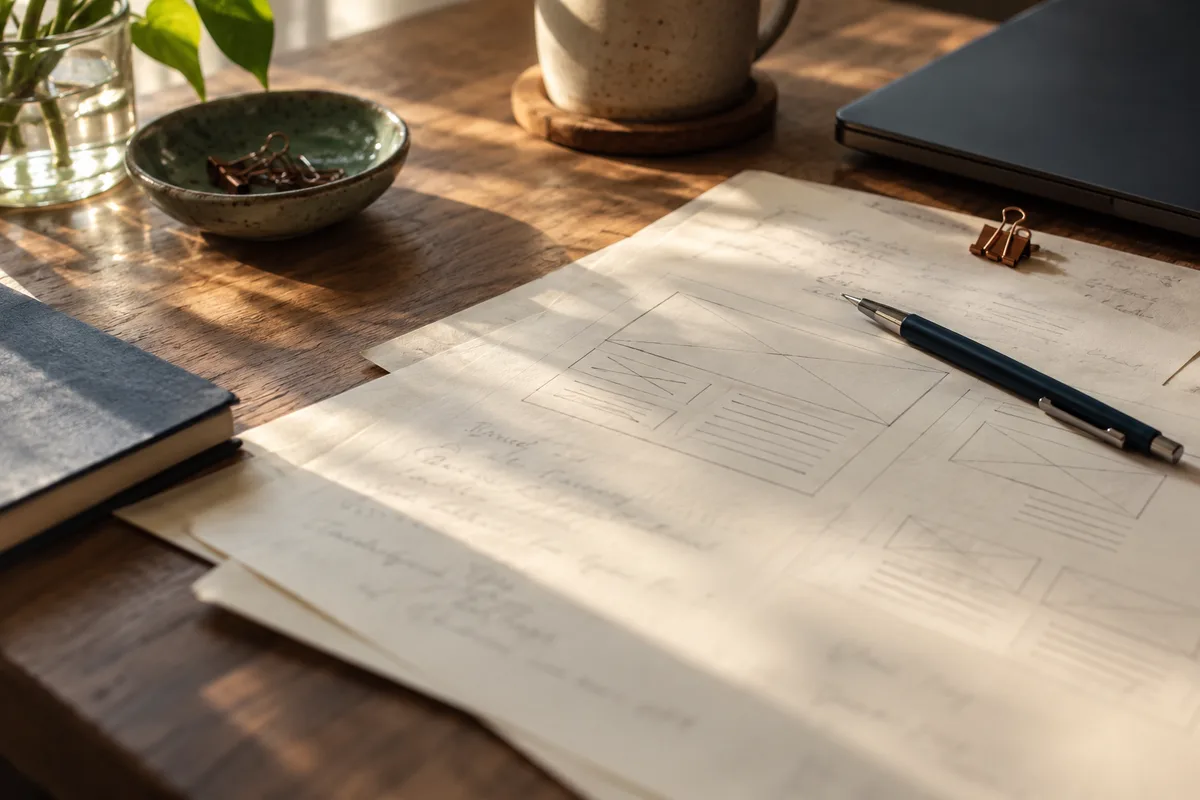
The offer, service area, proof, and next step need to be understandable before visual polish can help.
Type, contrast, spacing, and mobile layout should make the site easy to use, even when a page needs depth.
Semantic HTML, titles, descriptions, crawlable links, social previews, and accurate structured data are part of the build.
Who it fits
Local service businesses need visitors to know what they do, where they work, and how to get in touch. Technical founders often need to explain a complicated product without flattening it into vague marketing language. I work directly with both kinds of business and build around the actual decision a visitor is making.
We can inspect it before deciding whether a new design is worth the cost.
See redesign work ↗What a first site needs
I start with a page map and the material you already have: your offer, customer language, service area when relevant, photos or examples you can use, and the questions people ask before they contact you. From there we can choose the right number of pages and a sensible way to update them.
A visitor should know where they are, why the service fits, and how to take the next step.
Responsive layouts, readable navigation, real page copy, accessible controls, contact routes, useful titles and descriptions, crawlable internal links, and social sharing images. If structured data accurately describes the visible business and service details, I include it.
The domain, hosting, source files or content system, third-party accounts, and future update path should be clear. I test the finished pages on small screens and verify the live links and forms before the site is considered ready.
What that can look like
People may need to see the actual services, the area served, a few examples of the work, and a direct way to ask for a quote. Those details should be easy to reach from the first page, including on a phone.
The first job may be explaining the product and who it helps, then giving the right visitor enough detail to request a demo or start a conversation. I would make the technical story clear without asking every buyer to read a specification.
Start with the real problem
A short description of the business and the first customer you want to reach is enough to begin the conversation.